
House Painting on Fraser Street, Vancouver: What Older and Newer Homes Need
A house near Fraser and East 28th can have a very different exterior from one near East 46th. Around Fraser Street, you’ll find older character houses, mid-century homes, and newer infill. Some have painted wood siding and porch trim; others combine stucco and brick or use newer siding products. The age of the house helps you know what to look for, but the material, condition, and exposure of each surface determine how it should be painted.
Are the houses around Fraser Street older or newer?
There’s a mix. In nearby Riley Park, the Shirley Houses on East 27th Avenue are documented examples of early Craftsman homes with front porches. Farther north, Belleview at 2820 Fraser Street is an older Colonial Revival house built of cinder block, with a full-width porch and decorative columns. Belleview is a useful reminder that an old house can look like it needs a wood siding paint job when the walls themselves are masonry.
The Vancouver Special is another style worth knowing. Built widely from 1965 to 1985, it often has stucco above decorative brick and a shallow second-storey balcony. Toward South Hill, where the Fraser Street shopping district runs between East 41st and East 50th, newer housing is part of the mix too. One example is the Fraser Residences duplex development on East 46th Avenue. These examples show why a house’s age or postal code alone can’t tell you what’s on its walls.
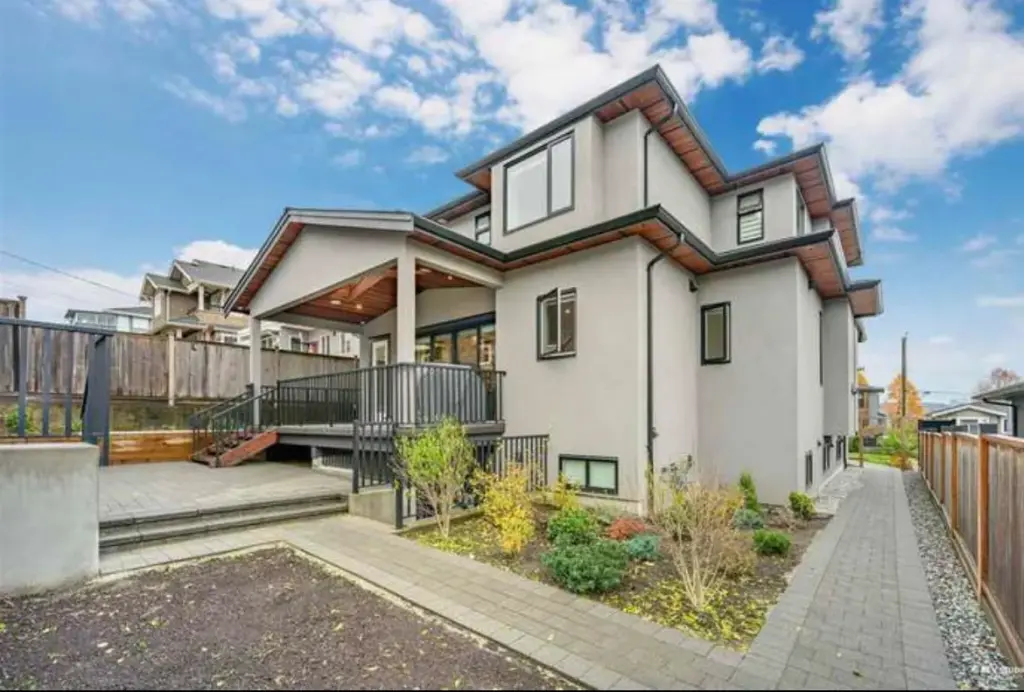
Exterior project photo from Luxe Layers.
Look at all four sides, especially after rain
The street-facing wall can look ready to paint while a shaded side yard is still damp. Walk around the house and look under window sills, around downspouts, along the lowest siding boards, and at the ends of porch trim. If peeling keeps coming back in the same spot, check where the water is coming from before repainting. A fresh coat won’t fix a leaking gutter, deteriorated wood, or water entering around a window.
For exterior painting in Vancouver, schedule around the condition of the surface and the drying window, as well as the forecast. The siding needs to be dry enough for the selected product, and the temperature and rain-free period need to meet its application instructions. One sunny afternoon after a wet spell may not be enough.
Does each exterior need a different type of paint?
Often, yes. Even when two surfaces can take an exterior acrylic topcoat, they may need different preparation or primers. A Vancouver Special with stucco walls, decorative brick, painted wood trim, and a metal railing may have four surfaces to assess in one visit.
| Exterior surface | What matters before painting |
|---|---|
| Painted wood siding, shingles, and trim | Check window sills, lower boards, and porch details for failed paint or soft wood. Once repairs are addressed and the wood is dry, bare spots may need a compatible primer. On exposed cedar, a stain-blocking exterior primer can help control tannin bleed when the coating system calls for one. Sherwin-Williams: Exterior substrates |
| Stucco and concrete block | Look for chalky residue, loose material, cracks, and signs of water getting behind the finish. Sound stucco can often be repainted with a compatible exterior acrylic coating. Porous or patched areas may need a masonry primer or sealer, depending on the product and condition. Benjamin Moore: Painting stucco |
| Decorative brick and metal railings | Decide first whether the brick should stay unpainted; it doesn’t have to match the stucco above it. Railings are a separate surface. Their coating needs to suit the metal and account for rust or failing paint. Sherwin-Williams: Exterior product selection |
| Fibre cement or vinyl siding | Identify the siding and check the manufacturer’s instructions. Factory-finished fibre cement and siding painted on site can have different repaint guidance. If vinyl is suitable for repainting, use a compatible coating and a colour approved for the siding. James Hardie: Care and maintenance | Benjamin Moore: Painting vinyl siding |
What changes when you paint inside?
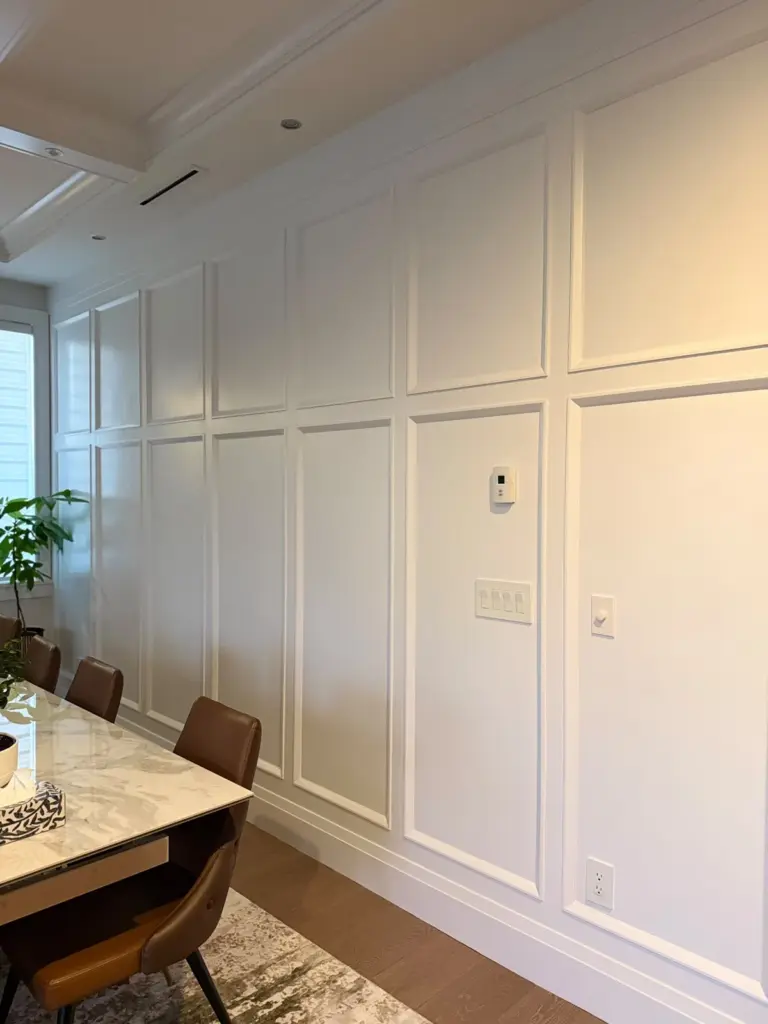
On an older home, an interior repaint might involve original wood casings, patched walls, and newer drywall from a previous renovation, sometimes all in one room. Look closely at glossy trim, old repairs, and areas where the existing finish is lifting before deciding what needs priming. In a newer duplex or laneway home, the job might be more about making drywall patches blend and choosing a washable finish for stairs, entryways, and other busy spaces.
If older paint may contain lead, arrange testing before sanding or stripping it. Health Canada notes that homes built before 1960 likely contain lead-based paint and that exterior paint on homes built between 1960 and 1990 may also contain it. Newer coats can cover older layers, so the topcoat’s appearance won’t answer the question.
Planning a repaint near Fraser Street?
Luxe Layers is based at 4228 Fraser Street, with 20 years in the painting business and more than 700 completed jobs. If you’re comparing estimates, ask each painter to identify the surfaces included, explain what preparation they need, and flag repairs that should happen before painting. That’s especially useful when the front of the house, the side walls, and the porch are made of different materials.
Explore our exterior painting and interior painting services, or request a free estimate. If you have photos, send one of each side of the house and close-ups of any peeling, cracks, or water staining.