
Can interior paint be used outside? Here's the truth
Can interior paint be used outside? The short answer is no, not reliably. Interior paint is not formulated for UV exposure, sustained moisture, or the constant expansion and contraction that outdoor surfaces go through, and it will show visible failure well before any exterior-grade product would.
The question comes up often when there’s leftover paint from an indoor project, a small outbuilding to refresh, or a shed door that needs something on it quickly. These are understandable situations, and the answer deserves more than a flat refusal. Understanding why the formulation is wrong for outdoor use, what failure looks like over time, and what to reach for instead will help you make a genuinely informed decision.
Key takeaways
Binder flexibility is critical: Interior paint binders are optimized for hardness. Exterior paint uses flexible acrylic or elastomeric resins that can move with the substrate without cracking.
Failure comes fast: Interior paint used outdoors typically shows fading and chalking within one season, with cracking and peeling developing within six to twelve months.
Primers extend the window, not the life: An exterior primer or sealer adds some extra time but does not convert interior paint into a durable outdoor coating.
Low-exposure surfaces have more tolerance: Sheltered structures with minimal direct sun and rain can tolerate a short-term workaround, but it must be treated as a maintenance measure only.
100% acrylic is the baseline: For Canadian exterior conditions, a 100% acrylic waterborne exterior paint with UV stabilizers and exterior-grade mildewcide is the minimum product specification.
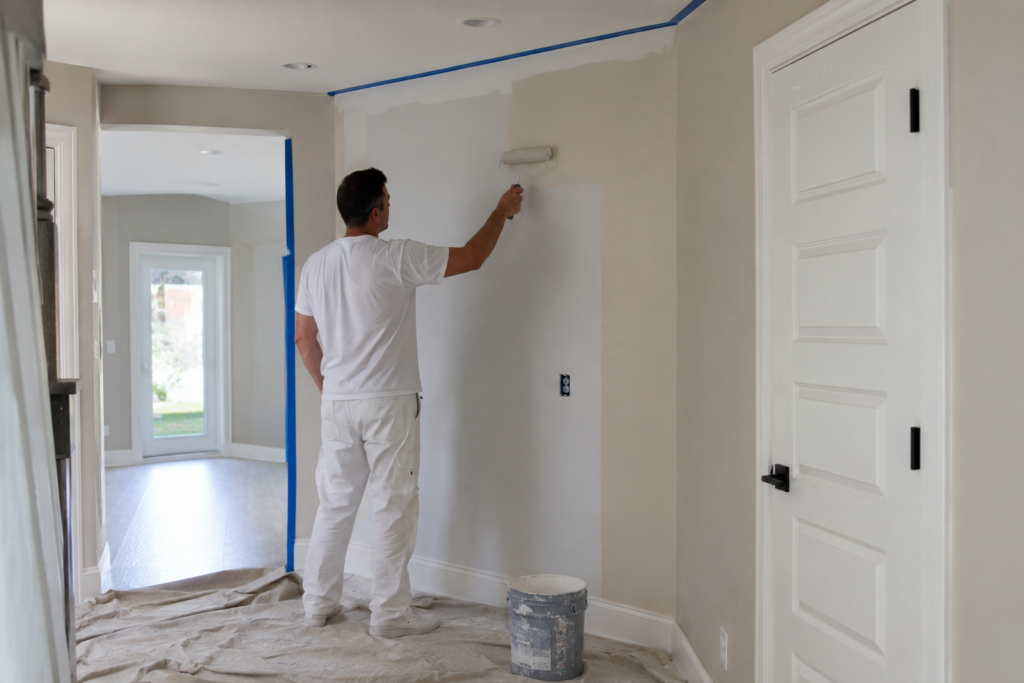
Why interior and exterior paint are formulated so differently
The binder does most of the work
The binder is the film-forming ingredient that holds the coating together and determines how it performs under stress. Interior paints use binders optimized for hardness, scrub resistance, and stain blocking, so they hold up well against fingerprints, cleaning products, and repeated contact. Exterior paints use more flexible binders, typically 100% acrylic or elastomeric resins, that can move with the substrate as it expands and contracts through heating and cooling cycles. Interior binders are not built to handle that mechanical stress, and when they’re forced to, they crack.
What interior paint trades away for indoor performance
Interior formulas prioritize cleanability, low odor, and smooth leveling because those are the demands of occupied living spaces. They contain limited UV stabilizers because indoor surfaces rarely face prolonged direct sunlight, so there’s no formulation reason to include them. The mildew inhibitors used in interior paint are also generally weaker than what prolonged rain and humidity require outdoors, particularly in a coastal climate like Vancouver’s.
Why exterior coatings need UV stabilizers and mildewcides
Exterior paints contain UV absorbers and hindered-amine light stabilizers (HALS) to protect the binder and pigments from sunlight degradation. UV absorbers filter damaging UV wavelengths before they can break down the paint film, while HALS interrupt the chain reaction of oxidation that still occurs when some UV energy gets through. These coatings also carry stronger mildewcide and fungicide packages suited to sustained outdoor moisture. UV absorbers and HALS are strongly recommended for exterior coatings exposed to B.C. weather because they significantly reduce photooxidation and pigment fading, making them effectively essential for a coating that will face a British Columbia winter followed by a Pacific Northwest summer.
Can interior paint be used outside? What actually happens
The first signs: fading and chalking
UV radiation begins degrading the pigments and binder almost immediately on a south- or west-facing surface. Within one season, interior paint applied outdoors typically shows noticeable color loss, because interior-grade pigments are not selected for lightfastness under sustained UV exposure. As the binder breaks down, it leaves a chalky, powdery residue that rubs off on contact. This chalking is not a surface-level cosmetic issue; it is the film literally disintegrating.
Cracking, blistering, and peeling follow
Once the binder loses flexibility, the film can’t accommodate the surface moving beneath it. Fine cracks form first, often at joints, edges, or corners where movement is greatest. Moisture enters through those cracks and either pushes the film off the substrate (blistering) or dissolves adhesion entirely (peeling). On wood siding, this process can accelerate rot in the substrate if moisture gets trapped beneath the failing film.
Mildew sets in on damp and shaded areas
Interior-grade mildew inhibitors break down outdoors faster than exterior-grade formulations. On north-facing walls, under eaves, or anywhere moisture lingers between rain events, dark mildew patches follow within one to two seasons. By this point, the repaint is no longer optional, and the corrective work involves more than simply painting over the existing surface.
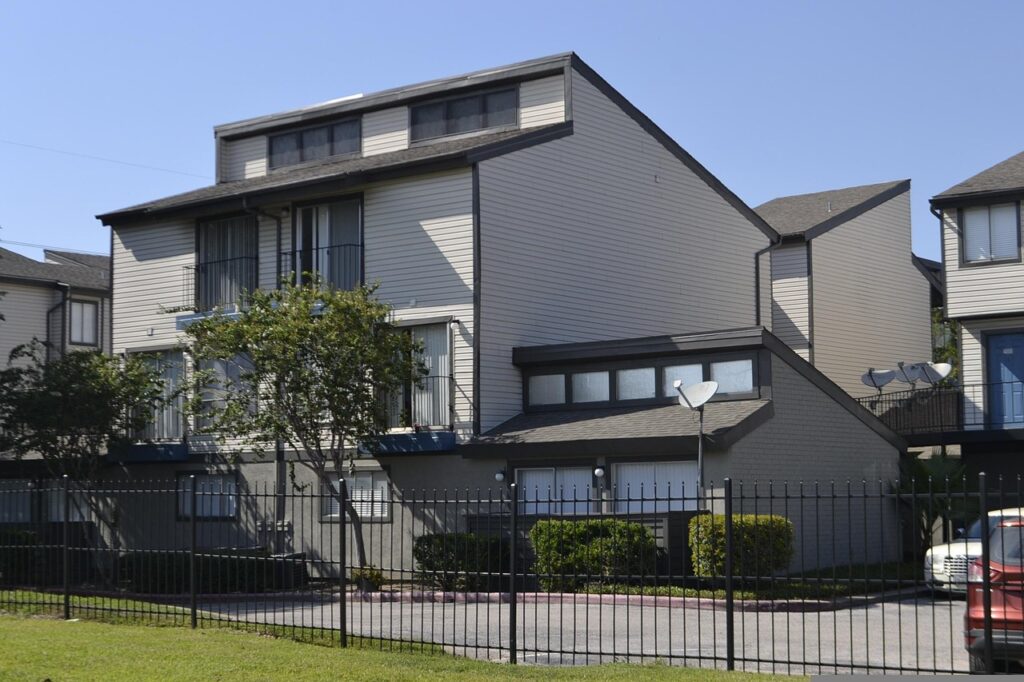
UV exposure, moisture, and cold: the forces that cause the most damage
Sunlight, rain, and temperature swings each attack interior paint through a different mechanism, and outdoors, all three operate simultaneously. UV radiation breaks the chemical bonds in binders and organic pigments, degrading the film from the outside in. Interior paints contain little to no UV protection, so the progression from fading to structural breakdown is rapid, particularly on surfaces that receive several hours of direct sun per day.
Exterior surfaces absorb and release moisture constantly, especially in coastal British Columbia where rainfall is frequent and humidity stays high. When interior paint is applied outdoors, its less permeable film can trap moisture beneath it. That trapped moisture has nowhere to go except through the film, causing blistering and bubbling. The less breathable the coating, the faster this process runs.
Freeze-thaw cycles compound the damage further. Water that enters micro-cracks in the film or porous substrate freezes and expands during cold snaps, then thaws, allowing more water in. Each cycle widens the cracks and forces more of the coating away from the surface. Interior paint has no flexibility to absorb this movement, so damage accumulates quickly through a Vancouver winter. The combined effect of all three forces means that visible failure often arrives within three to six months, with more severe deterioration such as peeling and mildew developing within six to twelve months.
Can interior paint be used outside with a primer or sealer?
The honest answer is no, not reliably. Applying an exterior primer before interior paint, or a clear exterior sealer over it, does not convert the system into a weather-resistant coating. The interior paint remains the weakest layer in the stack, and UV exposure, moisture, and thermal movement will still break it down. A primer or sealer adds some extra time, not genuine durability.
There are situations where a short-term workaround is tolerable. A garden structure that will be repainted within six months, a shed door in a covered area, or a low-exposure surface that gets minimal direct sun and rain may hold up adequately in the interim. In those cases, applying an exterior bonding primer can extend the window before failure, but it should be treated as a maintenance measure, not a finished result.
If interior paint is already on an exterior surface, the corrective steps are straightforward. Scrape and sand any loose, chalking, or blistered areas, then clean off mildew and dirt, and allow the surface to dry fully. Apply an exterior-rated bonding primer such as KILZ 2 All-Purpose Interior/Exterior or PPG Seal Grip Interior/Exterior before any topcoat, then follow with two coats of a compatible exterior finish. Skipping the bonding primer is a common mistake that shortens a repaired surface’s service life, because paint applied over a compromised film fails just as quickly as the original application.
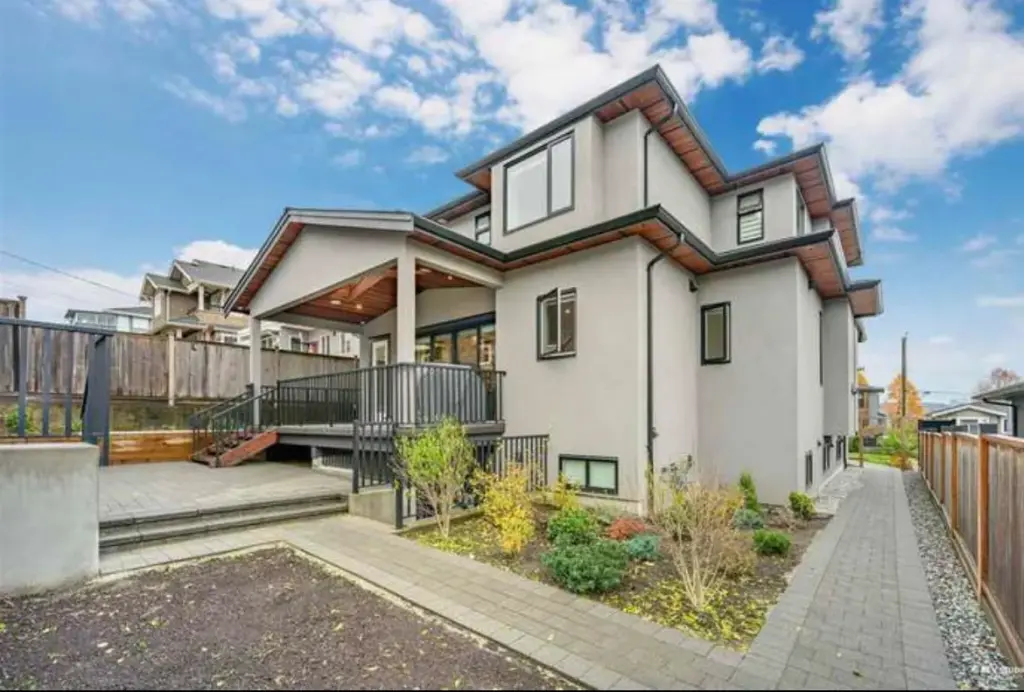
What to use instead: exterior paint that holds up in Canadian conditions
For exterior surfaces in coastal British Columbia, the two most important specifications are binder flexibility and mildew resistance. The combination of heavy rain, humidity, and significant temperature swings makes these non-negotiable. A 100% acrylic waterborne exterior paint with UV stabilizers and exterior-grade mildewcides is the baseline standard. Low-VOC options are widely available and perform comparably to conventional formulas.
Several products meet this standard and are available through Canadian retailers:
| Product | VOC level | Suitable substrates | Key guidance |
|---|---|---|---|
| Cloverdale Guardian 100% Acrylic Exterior | Low-VOC; Canadian product | Stucco, masonry, primed wood, fiber cement, primed metal, galvanized metal, weathered vinyl or aluminum | Apply above 3°C; use stain-blocking primer on new cedar; use appropriate metal primer for metal substrates |
| Benjamin Moore Aura Waterborne Exterior | Under 50 g/L VOC | Wood, fiber cement, vinyl or aluminum siding, brick, concrete, stucco, primed metal | Self-priming on many prepared surfaces; new masonry must cure 30 days; high-pH masonry may need masonry primer |
| Benjamin Moore Ultra Spec Exterior | Under 50 g/L VOC | Wood, hardboard, fiber cement, vinyl, aluminum, brick, stucco, stone, primed metal | New masonry must cure 30 days; remove rust and oil from metal; prime new surfaces as required |
| BEHR Premium Plus Exterior | Low-VOC; available through Home Depot Canada | Wood, vinyl, fiber cement, stucco, brick, masonry, fences | Apply between 2°C and 32°C with conditions maintained for at least four hours; use stain-blocking primer for tannin-rich wood |
Note that application temperature requirements vary by product, always check the manufacturer’s technical data sheet before scheduling exterior work. Substrate-specific priming matters before any exterior project. New cedar needs a stain-blocking primer to control tannin bleed. New masonry should cure for at least 30 days before primer or paint is applied. Bare ferrous metal requires a rust-inhibitive primer before any topcoat; applying exterior paint directly to bare iron or steel is not appropriate according to manufacturer guidance. For galvanized metal, cleaning and a compatible galvanized-metal primer are both required before finishing coats.
At Luxe Layers, we match the coating specification to the substrate, the exposure, and the climate before anything else, because product selection and surface preparation are the primary factors separating a long-lasting exterior paint job from one that fails early.
The bottom line: can interior paint be used outside?
Interior paint is not suitable for outdoor use, and the formulation reasons are clear: the binder lacks flexibility, UV protection is minimal, and mildew resistance is insufficient for sustained outdoor exposure. What looks like a cost-saving shortcut typically leads to a repaint within one or two seasons, adding materials, preparation, and labor costs that the right product up front would have avoided.
Before any exterior painting project, check the product label for substrate compatibility, minimum application temperature, and outdoor suitability. Always consult the manufacturer’s technical data sheet for the specific product you’re using, since minimum temperature requirements vary. If you’re uncertain, a 100% acrylic exterior paint with an appropriate primer is the professional standard for good reason, it’s what actually holds up. When someone asks whether interior paint can be used outside, the honest answer is this: it can be applied, but it won’t perform, and the failure timeline is measured in months, not years.
If you’re planning an exterior project and want guidance on product selection, surface preparation, or scheduling around Vancouver’s climate, get in touch with our team at Luxe Layers. We’ll walk you through what the surface needs and what will hold up through a full season before any work begins.
Frequently Asked Questions
Can leftover interior paint be used temporarily on a garden shed or outdoor furniture?
Yes, you can use leftover interior paint as a short-term workaround, but it will not hold up like an exterior paint. We note this is only tolerable for sheltered, low-exposure surfaces or when you plan to repaint within a few months, since fading, chalking, and peeling typically appear within one season and more severe failure within six to twelve months.
If interior paint is already peeling outdoors, what steps should we take to repair it properly?
You should scrape and sand loose, chalking, or blistered areas, clean off mildew and dirt, allow the surface to dry fully, then apply an exterior-rated bonding primer before an exterior topcoat. We advise using a bonding primer such as KILZ 2 All-Purpose Interior/Exterior or PPG Seal Grip Interior/Exterior where appropriate and then following with two coats of a compatible exterior finish.
Will adding mildewcide or mixing in additives make interior paint suitable for outdoor use?
No, adding mildewcide or other additives does not convert interior paint into a genuine exterior coating. We explain that interior binders still lack UV stabilizers and the flexibility needed for outdoors, so additives may extend the window slightly but will not prevent the rapid degradation from UV, moisture, and thermal movement.
Are low-VOC exterior paints reliable for Canadian coastal conditions?
Yes, low-VOC exterior paints are available and perform comparably to conventional formulas for coastal British Columbia. We emphasize that the critical specifications are 100% acrylic binder flexibility plus UV stabilizers and exterior-grade mildewcides, and that low-VOC options meeting those specs are suitable for the climate.